Reassessing Government Borrowing Strategies: The Case for Short-Term Treasury Securities

By Asif Khan, CFA
Chairman
EDGE AMC Limited
Posted on: 11 May, 2024
When borrowing rates are high, it's smarter to borrow less in longer durations and borrow more in shorter. That means the borrower is not locking up high rates for long term.
In the case of bank borrowing, sometimes there is scope to refinance at a lower interest rates once rates have fallen enough. However when the government is borrowing via treasury instruments the securities are not 'callable'. This implies that government cannot repay the debt ahead of schedule and refinance at lower costs. This makes debt management absolutely essential to ensure the tax payers don't have unnecessary burden.
In recent times yields on treasury securities have hit multi decade highs. The rates are also significantly higher than current inflation rates. This is the time short term borrowing should increase.
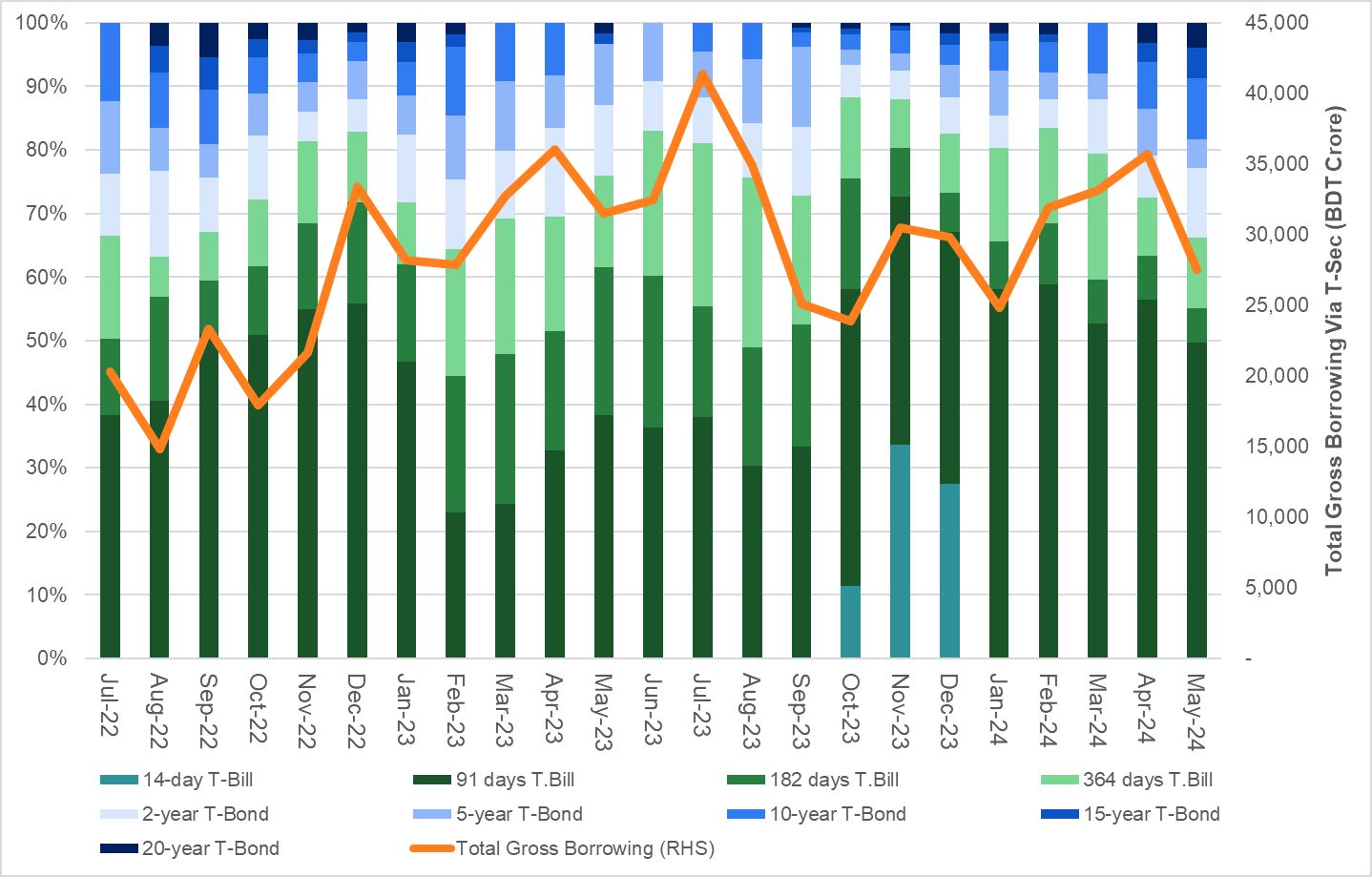
In reality we did the opposite. As per the chart below we have increased borrowing via treasury bonds and decreased via bills. As a result the yield curve went through a 'bear steepening' at the peak of the rate cycle!! In a bear steepening long term yields increase more than short term ones.
I am urging our policymakers to reconsider this strategy. When fiscal pressure is rising let us not burden our tax payers for long periods. Once yields drop we can move into longer tenor instruments.
Chart created by EDGE Research team.
- Tags:
- Government Borrowing, Treasury Securities, Debt Management, Fiscal Policy, Economic Strategy, Interest Rates, Yield Curve, Short-Term vs Long-Term Debt, Inflation Rates, Bear Steepening, Financial Management, Taxpayer Burden
Search
Categories
Recent Post
-
UPS, Sanchaypatra or Mutual Funds? A 25-Year-Old's Guide to Retirement Planning
04 Oct, 2026 -
Is Your Mutual Fund Investment Safe in Your Brokerage House? Here's How Your Units Are Protected
23 Sep, 2026 -
প্রবাসী বাংলাদেশিদের জন্য গাইড: রেমিট্যান্সকে কীভাবে দীর্ঘমেয়াদী বিনিয়োগে রূপান্তর করবেন
10 Sep, 2026 -
৪.৮ লাখ থেকে ৭.০৯ লাখ: EDGEBDMF-এ ৮ বছরের SIP-এর একটি বাস্তব উদাহরণ
09 Sep, 2026 -
নতুন ৭৫ লাখ টাকার মিউচুয়াল ফান্ড সীমায় বাংলাদেশে আপনার ট্যাক্স রিবেট কীভাবে সর্বোচ্চ করবেন
09 Sep, 2026
Have Any Question?
If you have any questions feel free to reach out to us via phone or email.